NovaCell Institute by Belleza works with experienced medical professionals, researchers, and ISO 9001-certified laboratory partners who have contributed to advancing the science of regenerative medicine for over 25 years. This collaborative model allows patients to benefit from advanced biotechnology, medical oversight, and care delivered in state-of-the-art clinical environments.
Discover what stem cells are, how they function at a biological level, and how our precision-based protocols are designed to support healing, restore function, and elevate patient outcomes.
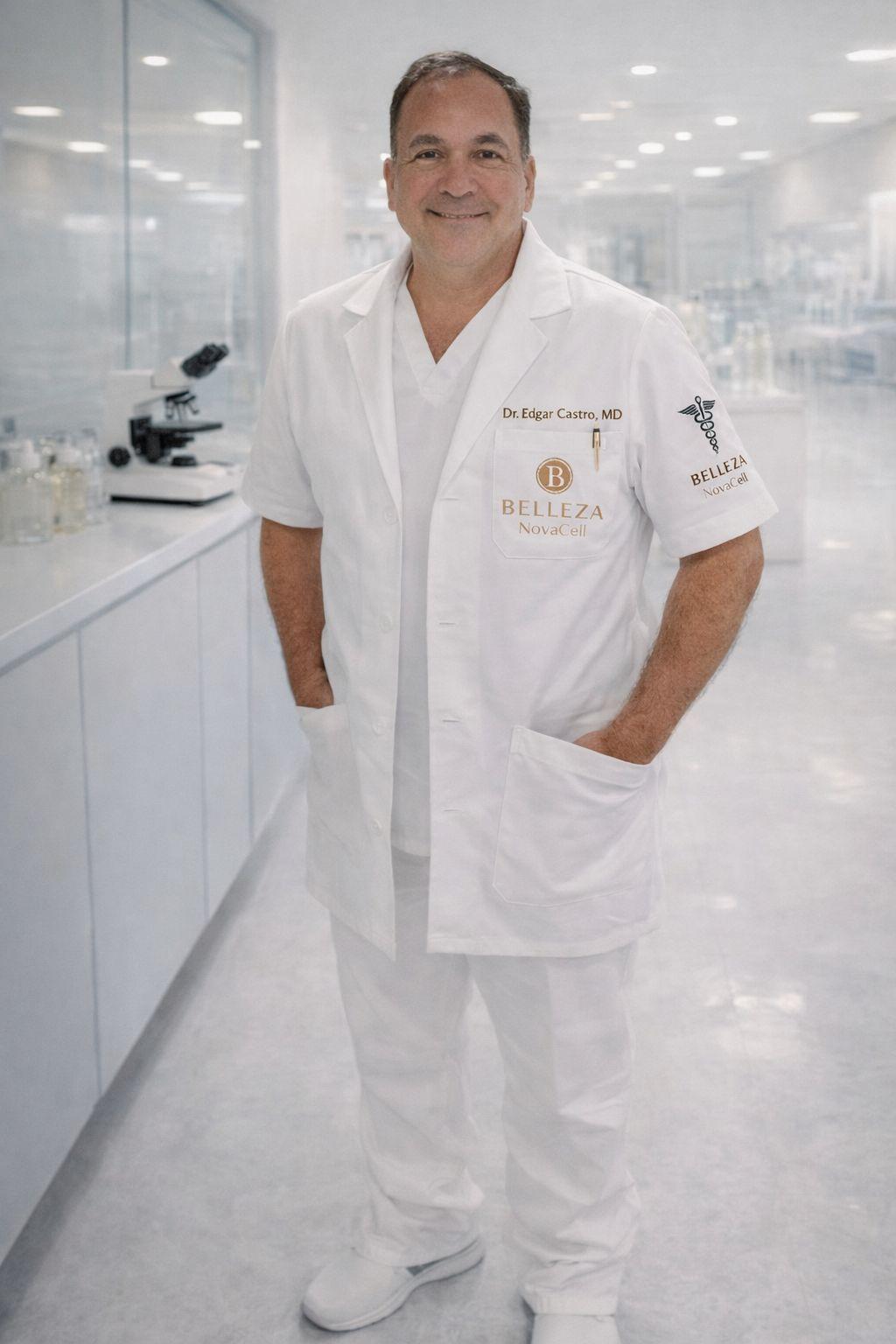
To ensure our patients receive the most advanced care possible, Dr. Edgar Castro actively collaborates with cutting edge research labs, physicians and researchers both across the United States and internationally.
This constant exchange of knowledge allows us to integrate the latest scientific advancements directly into patient care, keeping our protocols precise, modern, and results-driven.
Based in Barranquilla, Colombia, our approach is defined by innovation, global insight, and an uncompromising commitment to excellence.
We don’t follow trends. We set the standard in regenerative medicine.
Adult stem cells can be sourced from multiple areas of the body, including bone marrow, adipose (fat) tissue, and peripheral blood, as well as from umbilical cord and placental tissue.
Once collected, these cells are transferred to a specialized laboratory where they are carefully processed, purified, and evaluated for quality, viability, and safety before being prepared for clinical use.
The most commonly used types include mesenchymal stem cells (MSCs)—known for their regenerative and anti-inflammatory properties—and hematopoietic stem cells (HSCs), which play a key role in blood and immune system function.
This controlled, science-driven process ensures that only high-quality, clinically viable cells are used to support optimal therapeutic outcomes.
Umbilical cord–derived mesenchymal stem cells (UC-MSCs) are found in the umbilical cord tissue of healthy newborns, collected safely after birth with no harm to mother or baby.
Although they are classified as adult (postnatal) stem cells, these cells are biologically younger, highly active, and possess strong regenerative potential—making them ideal for advanced therapies.
At NovaCell Institute in Barranquilla, Colombia, we utilize cord-derived mesenchymal stem cells that are carefully isolated from umbilical cord tissue and processed under strict, internationally recognized laboratory standards.
For specific treatment protocols, these cells may be expanded to achieve optimal therapeutic dosing—always under tightly controlled conditions to ensure quality, safety, and consistency.
Mesenchymal stem cells from umbilical cord tissue are widely recognized for their ability to:
Help reduce inflammation
Support immune system balance
Release bioactive factors that assist in tissue repair and regeneration throughout the body
All donated umbilical cords are obtained as by-products of normal, healthy births. Each donation undergoes rigorous screening for sterility and infectious diseases, following internationally accepted blood bank and laboratory safety standards.
This ensures that every treatment meets the highest level of clinical integrity and patient safety standards.
Bone marrow–derived stem cells are among the most extensively studied in regenerative medicine, with research dating back to the 1960s. They were first used in bone marrow transplants for leukemia and other blood-related disorders, and today their potential has expanded into a wide range of regenerative and degenerative conditions.
Bone marrow is a rich source of CD34+ stem cells, which play a key role in blood vessel formation and circulation (revascularization). However, it contains relatively fewer mesenchymal stem cells compared to other sources.
These cells support the body’s natural healing processes by improving blood flow, promoting tissue repair, and enhancing the activity of other regenerative cells—making them a valuable component in advanced, multi-layered treatment approaches.
Fat stem cells are essentially sequestered and are not available to the rest of the body for repair or immune modulation. Fat derived stem cells have been used for successful treatment of companion animals and horses with bone and joint injuries for the last 15 years with positive results.
Adipose tissue is a rich source of mesenchymal stem cells (MSCs) and T-regulatory cells which modulate the immune system. Adipose-derived cells can be used for treating systemic autoimmune and inflammatory conditions. They also play a role in regenerating injured tissue.
Although Dr. Edgar of NovaCell Institute pioneered treating patients with osteoarthritis, rheumatoid arthritis, multiple sclerosis, and other autoimmune diseases using fat derived stem cells, we have found that mesenchymal stem cells from umbilical cord tissue are superior to all types of the patients own stem cells.
“Through retrospective analysis of our cases, we’ve identified proteins and genes that allow us to screen several hundred umbilical cord donations to find the ones that we know are most effective. We only use these cells and we call them ‘Elite Cells™’.
We go through a very high throughput screening process to find cells that we know have the best anti-inflammatory activity, the best immune modulating capacity, and the best ability to stimulate regeneration.”
The Stem Cell Selection Process at NovaCell Institute
Human umbilical cord–derived mesenchymal stem cells (MSCs) are carefully isolated and processed under strict international laboratory standards, with the goal of creating highly controlled and consistent cell populations.
At NovaCell Institute in Barranquilla, Colombia, all cellular products are prepared and handled in accordance with applicable Colombian regulatory frameworks (INVIMA) and internationally recognized GMP (Good Manufacturing Practice) guidelines to ensure safety, traceability, and quality.
Selected cell lines similar to those used in advanced research settings have supported investigational therapies, including compassionate-use cases under regulatory oversight in the United States. These experiences contribute to the continuous refinement of protocols and quality standards applied in our treatments.
This ensures that every treatment delivered at NovaCell Institute meets a high standard of clinical integrity, safety, and scientific responsibility.
Early pioneering work in regenerative medicine—including published research on treating multiple sclerosis patients with adipose-derived stem cells—helped lay the foundation for modern stem cell applications.
Building on years of clinical experience and thousands of treatments, Dr. Edgar Castro and the NovaCell team have refined their approach based on one key principle: cell performance matters.
While adipose (fat)-derived stem cells were once widely used, advancements in the field have shown that umbilical cord–derived mesenchymal stem cells (UC-MSCs) offer superior biological advantages.
Unlike older cells sourced from bone marrow or fat, UC-MSCs are biologically more active and adaptable, making them a preferred option for advanced regenerative protocols.
Additionally, these cells are well-tolerated by the body and are not typically recognized as foreign, allowing for safe application across a wide range of patients.
At NovaCell Institute in Barranquilla, Colombia, our protocols have evolved to prioritize umbilical cord–derived MSCs due to their consistency, safety profile, and enhanced regenerative performance.
This evolution reflects our commitment to staying aligned with the latest scientific advancements—
and delivering more effective, precision-based regenerative care.
All umbilical cord donations are obtained from **healthy, full-term births**, with full informed consent from the mother. Each donor completes a comprehensive medical questionnaire and provides a blood sample for extensive screening. Donor blood is rigorously tested for **infectious diseases**, including HIV, hepatitis, and other transmissible conditions, following internationally recognized safety standards. Only after confirming that the tissue meets strict **safety and quality criteria** is the umbilical cord processed to isolate stem cells in a controlled laboratory environment. All donated cords are **natural by-products of normal deliveries**—with no harm to mother or child—and are handled under protocols aligned with **international blood bank standards and INVIMA regulatory guidelines**. This ensures every cell used meets the highest levels of **safety, traceability, and clinical integrity**.

At NovaCell Institute, stem cell therapy is delivered through precision-based protocols tailored to each patient’s condition, medical history, and treatment goals.
Patients typically receive a series of applications throughout their treatment plan to maximize therapeutic effect and support sustained regenerative activity.
Depending on the indication, stem cells may be administered through:
Intravenous (IV) – for systemic support and whole-body regeneration
Intramuscular – targeting specific muscle groups or localized conditions
Each method is carefully selected to ensure optimal delivery, safety, and clinical effectiveness, based on a fully personalized treatment strategy.
This is one of the **safest and most straightforward methods** for delivering stem cells throughout the body. It allows for **systemic distribution**, supporting whole-body regenerative effects. No anesthesia is required. For comfort, a **topical lidocaine spray** may be applied to the injection site prior to the needle insertion. The procedure is simple, well-tolerated, and typically takes **20–30 minutes** to complete.
Stem cells are delivered directly into targeted muscle tissue, allowing for focused, localized regenerative support. This method is safe, minimally invasive, and well-tolerated, typically requiring no anesthesia. In some cases, a topical anesthetic may be used to enhance comfort during the procedure. Intramuscular application is commonly used to support muscle recovery, reduce inflammation, and improve tissue function in specific areas.
Stem cells are injected directly into the affected joint by a licensed physician, allowing for precise, targeted treatment at the source of pain or degeneration. This method is commonly used for conditions such as arthritis and joint inflammation, helping support cartilage health and improve joint function. Intra-articular application is safe, minimally invasive, and typically does not require anesthesia, though local measures may be used to enhance patient comfort.
The procedure is done under local anesthesia and in strict sterile conditions to ensure patient safety and precision.
The procedure is typically well-tolerated and takes approximately 30 minutes to complete.
NovaCell Institute was developed as a specialized extension of Belleza Esthetic Clinic, bringing together experienced physicians, medical professionals, researchers, and ISO 9001-certified laboratory partners who have contributed to advancing regenerative medicine for over 25 years.
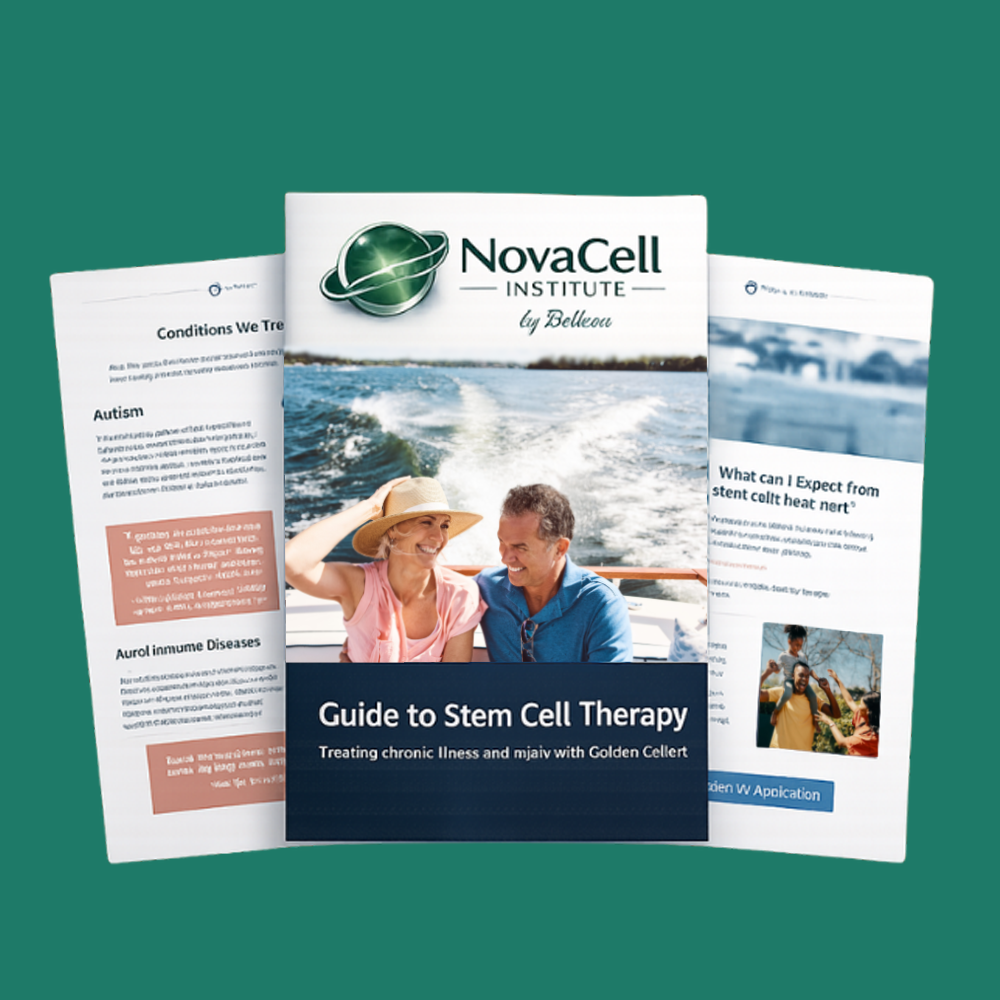
Have you wanted to explore stem cell therapy, but you’re not sure where to start? Our free guide answers the most common questions about what to expect, the science behind our proprietary Elite Cells™, and much more!
NovaCell Regenerative Medicine by Belleza
Cra 59B 81-143
Barranquilla, Colombia
Outside or Inside US Call:
Phone: +1 (754) 333-6754
Copyright 2026, NovaCell Institute in Barranquilla, Colombia. All rights reserved.